How to handle, measure, store, and verify research peptides. Sample state, reconstitution, syringe math, storage windows, analytical purity, and the certificate that backs it all up.
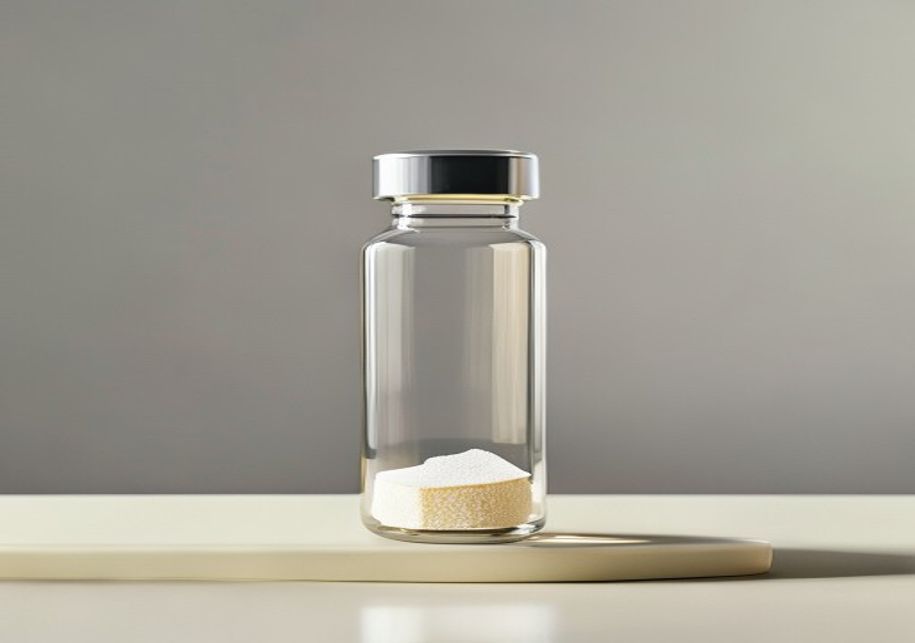
Research peptides ship as a lyophilized (freeze-dried) powder. Reconstitution is simply dissolving that powder into a measurable liquid.
Before reconstitution: dry lyophilized material, not a prepared liquid.
What you need
Your peptide vial
Bacteriostatic water
Alcohol swabs
A syringe for mixing and an insulin syringe for measuring
Steps
Let the vial and water reach room temperature.
Swab both rubber stoppers with alcohol.
Draw your chosen volume of bacteriostatic water.
Inject it slowly down the inside wallof the vial. Do not spray it directly onto the powder.
Swirl gently (never shake) until the solution is completely clear.
Store in the refrigerator.
Not sure how much water to add or how much to draw? The dosage calculator does the math and shows the exact syringe mark.
Bacteriostatic water, explained
Bacteriostatic wateris sterile water containing 0.9% benzyl alcohol. The preservative lets a reconstituted vial be accessed multiple times over its stability window without spoiling, which is why it's the standard choice for reconstitution.
More water = more dilute = larger, easier-to-read draws.
Less water = more concentrated = smaller draws.
The amount of peptidenever changes, only how spread out it is.
Play with the water field in the calculator to see how it shifts your syringe units in real time.
Reading an insulin syringe
Most reconstitution uses a U-100 insulin syringe. The key relationship:
100 units = 1 mL
1 unit = 0.01 mL
50 units = 0.5 mL
So if the calculator says draw 0.25 mL, that's the 25-unit mark. The tool converts every result into units automatically, plus a visual meter so you can picture the fill line.
Storage & handling
Powder (before mixing): refrigerate and keep out of light; many peptides are stable frozen for long-term storage.
Reconstituted (after mixing): refrigerate at roughly 2–8°C (36–46°F) and use within the stability window on the product's COA.
Avoid heat, direct sunlight, and vigorous shaking.
Lyophilized peptides tolerate the short room-temperature transit window during shipping.
Understanding purity
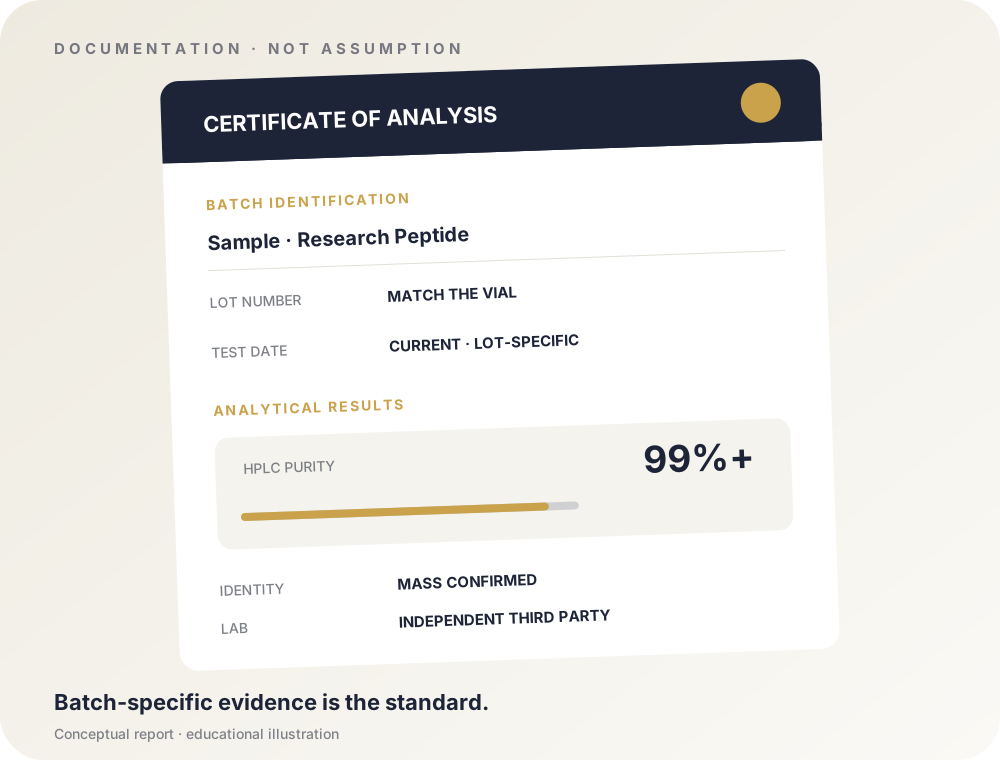
"Purity" is the percentage of the sample that is the intended peptide, as opposed to fragments, byproducts, or residual solvents. Quality suppliers target 99%+ and publish independent testing to show it. The number on its own means nothing without the document behind it.
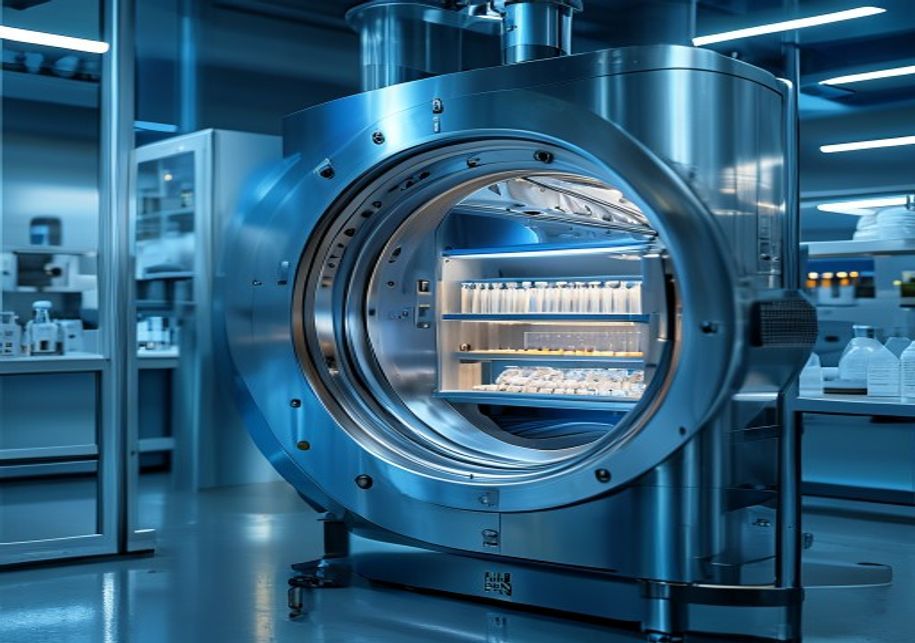
Analytical instrumentation turns a purity claim into a result that can be reviewed.
HPLC measures purity (how much is the target compound).
Mass spectrometry confirms identity (it's actually the right molecule at the right weight).
A purity figure you cannot verify is a marketing claim. The certificate is what turns it into evidence.