A quality claim you cannot check is just a sentence. This is the document that turns it into evidence, and how to tell a strong one from a decorative one.
Below is an annotated specimen. Every value on it is illustrative. It is published to teach the format, and it deliberately does not describe a real production lot.
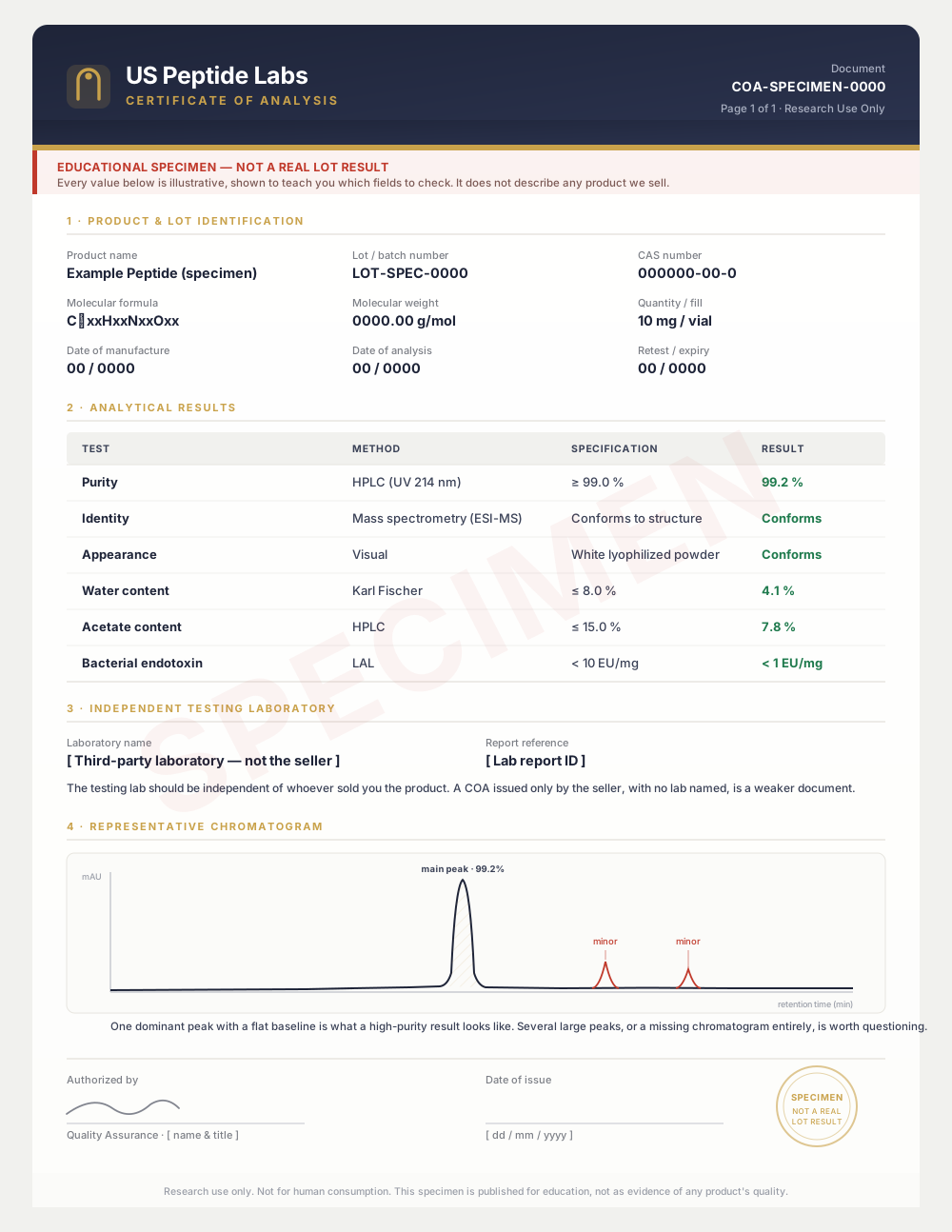
In the order they usually appear.
The lot number is the whole point of the document. A COA describes one specific batch, not a product line. If the lot on the certificate does not match the lot printed on the vial in front of you, the document tells you nothing about what you are holding. This is the single most common gap worth checking first.
Testing has a shelf life in the sense that it describes the material as of that date. A certificate dated years before the manufacture date of your batch is not describing your batch. Look for an analysis date that sits sensibly after the manufacture date.
High-performance liquid chromatography separates the sample into its components and measures how much of it is the intended compound. Look for the specification (what was required, commonly 99% or higher) next to the actual result. A result with no specification beside it is harder to judge, and a purity claim with no method named at all is a marketing number rather than a measurement.
Purity tells you how much of the sample is one dominant compound. It does not tell you that the compound is the right one. Mass spectrometry confirms identity by measuring molecular weight against the expected structure. A document reporting purity without any identity confirmation has answered only half the question.
Lyophilized peptides retain some moisture, and many are supplied as acetate salts. Both are normal and both are usually specified with an upper limit. They matter because they are part of the vial mass that is not peptide, which is a detail people often miss when reasoning about what is actually in a vial.
Bacterial endotoxin testing, usually by LAL, is reported for material intended for parenteral laboratory work. Where it is reported, it should carry a specification and a result, like any other test.
This is the field that separates a strong COA from a weak one. Independent third-party testing means the lab has no stake in the result. A certificate issued by the seller with no laboratory named, no report reference, and no signature is a claim about testing rather than evidence of it.
The best certificates include the actual chromatogram, not just the number derived from it. One dominant peak against a flat baseline is what a high-purity result looks like. Several substantial peaks, or a chromatogram omitted entirely while a high purity number is quoted, is worth a question.
Any one of these is a reason to ask a question before assuming a claim is documented.
A Certificate of Analysis, or COA, is a laboratory document reporting the test results for one specific batch of material. It typically states the product and lot number, the tests performed, the method used for each, the specification that was required, and the result obtained. Its purpose is to connect a quality claim to a measurement someone actually made.
Check that the lot number matches the product you have, that an independent laboratory is named with a report reference, that each result is paired with the method used to obtain it, and that the analysis date makes sense relative to the manufacture date. Where a laboratory is named, its report can usually be requested or verified directly.
Suppliers commonly specify 99% or higher by HPLC for research-grade material. What matters as much as the number is whether the specification, the method and the result all appear together, and whether identity was confirmed separately by mass spectrometry.
No. A COA is an analytical document describing what a batch contained when it was tested. It is not a safety assessment, not an approval, and not a statement of fitness for use in humans. Research compounds are for laboratory use only.
Because independence removes the conflict of interest. When the party selling the material is also the only party attesting to its quality, the document and the claim come from the same source. An independent laboratory has no commercial stake in the outcome.
Our support assistant can walk you through the fields on it, or explain any test method by name.
Read the full guides