Peptide education · Research references · Practical tools
Research Reference
Peptide Library
An educational reference to frequently studied research compounds. What each one is, how researchers group them, and what the published work set out to measure.
Strictly for laboratory research use
Research starts with context.
Start here for context, not for conclusions. Verify sequence, sample state, identity, and purity against analytical methods and batch documentation before treating anything on this page as settled.

01 · StructureSequence shapes function
Peptides are short amino-acid chains. Sequence and structure drive how each one behaves, and therefore how it is studied.
02 · VerificationTrust the analysis
Identity and purity are analytical questions, not claims. Read the test methods and the batch-specific paperwork.
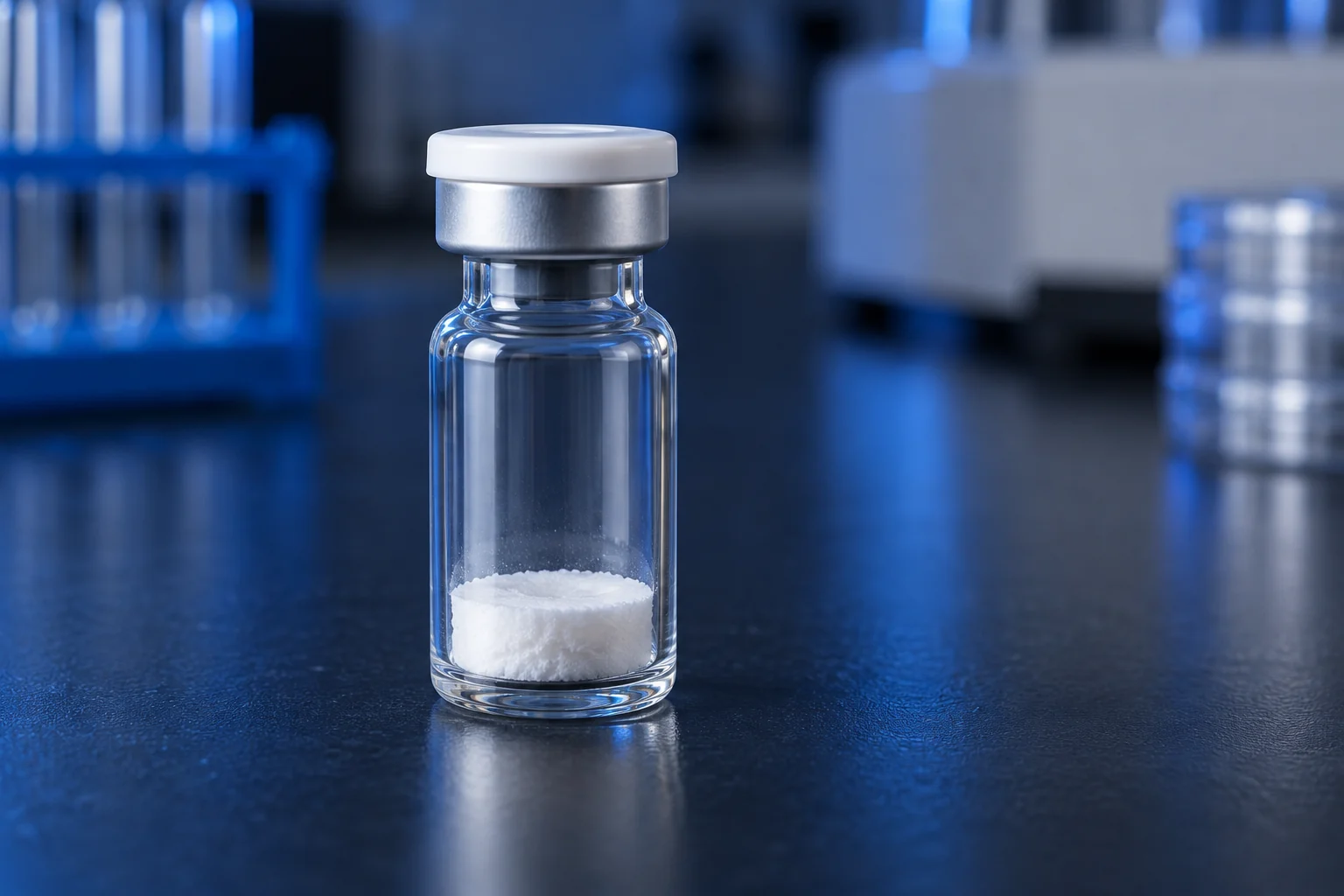
03 · Sample stateKnow what you are viewing
Lyophilized samples are dry, unreconstituted material. Not a prepared liquid, and not a finished medicine.
All compounds in the library
Every compound below has a reference page covering what it is, how researchers group it, and what the published work set out to measure. Reported amounts on the linked dosage pages summarize published research literature. They are not dosing recommendations and not instructions for use in humans.
Tissue repair & recovery
Compounds studied in wound healing, tendon and ligament models, and angiogenesis.
- ARA-290 EPO-derived innate repair receptor peptide
An 11-amino-acid EPO-derived peptide studied for tissue-protective and neuropathic repair signaling without erythropoiesis. Also referred to as cibinetide, pHBSP, helix B surface peptide. Reported research amounts for ARA-290 →
- BPC-157 synthetic gastric pentadecapeptide
BPC-157 is a gastric pentadecapeptide studied in preclinical models of tissue integrity, angiogenesis, and NO signaling. Also referred to as Body Protection Compound 157, PL 14736, stable gastric pentadecapeptide BPC 157. Reported research amounts for BPC-157 →
- Cartalax Ultrashort peptide bioregulator (cartilage/connective-tissue research)
A synthetic Ala-Glu-Asp tripeptide from the Khavinson bioregulator family studied for cartilage and connective-tissue gene regulation. Also referred to as AED, Ala-Glu-Asp, T-31. Reported research amounts for Cartalax →
- GHK-Cu Copper-binding tripeptide
A naturally occurring copper-binding tripeptide studied for skin remodeling, collagen support, and tissue repair signaling. Also referred to as Copper Peptide, GHK-Copper, Copper tripeptide-1. Reported research amounts for GHK-Cu →
- Glow Multi-peptide research blend (copper peptide + repair peptides)
A three-peptide research blend of GHK-Cu, BPC-157, and TB-500 studied conceptually for complementary tissue-remodeling pathways. Also referred to as GLOW blend, GHK-Cu + BPC-157 + TB-500, GLOW peptide. Reported research amounts for Glow →
- Klow Multi-peptide research blend (anti-inflammatory + copper peptide + repair peptides)
A four-peptide research blend combining KPV, GHK-Cu, BPC-157, and TB-500 for multi-pathway tissue and inflammation studies. Also referred to as KLOW blend, KPV + GHK-Cu + BPC-157 + TB-500, KLOW peptide blend. Reported research amounts for Klow →
- TB-500 Actin-binding repair peptide
A synthetic fragment related to thymosin beta-4, studied for cell migration, actin regulation, and tissue-repair pathways. Also referred to as Thymosin Beta-4 fragment, Tβ4 fragment, LKKTETQ motif peptide. Reported research amounts for TB-500 →
- Wolverine Dual repair-peptide research blend
A two-peptide research blend of BPC-157 and TB-500 combining gastric pentadecapeptide and thymosin beta-4 pathway tools. Also referred to as Wolverine blend, BPC-157 + TB-500, BPC/TB blend. Reported research amounts for Wolverine →
Metabolic & body composition
Incretin pathways, glucose handling, lipolysis and body-weight endpoints in research.
- 5-Amino-1MQ Small-molecule NNMT inhibitor (not a classical peptide)
A membrane-permeable NNMT inhibitor studied in obese mouse models for NAD+/metabolic and adipose research, usually handled as an oral research solid. Also referred to as 5-amino-1-methylquinolinium, 5A-1MQ, NNMTi. Reported research amounts for 5-Amino-1MQ →
- Adipotide Targeted adipose-vasculature peptidomimetic
A prohibitin-targeting peptidomimetic studied for selective disruption of white-fat vasculature in obesity models. Also referred to as Prohibitin-targeting peptide 1, TP01, FTPP. Reported research amounts for Adipotide →
- AICAR AMPK-activating nucleoside analog
A cell-permeable nucleoside analog used to activate AMPK and probe metabolic stress signaling in experimental systems. Also referred to as Acadesine, 5-aminoimidazole-4-carboxamide ribonucleoside, AICA riboside. Reported research amounts for AICAR →
- AOD-9604 human growth hormone C-terminal peptide fragment
AOD-9604 is an hGH 177-191 fragment studied for lipid metabolism, fat oxidation, and cartilage models. Also referred to as AOD9604, hGH fragment 177-191, anti-obesity drug 9604. Reported research amounts for AOD-9604 →
- Cagrilintide Long-acting amylin receptor agonist
A long-acting amylin analogue studied for once-weekly appetite and weight-regulation research. Also referred to as AM833, NN9838, long-acting amylin analogue. Reported research amounts for Cagrilintide →
- Lipo-C Compounded lipotropic nutrient blend (not a single peptide)
A compounded MIC+B12 blend studied and used in metabolic/wellness research contexts, not a single peptide molecule. Also referred to as MIC+B12, MIC B12, lipotropic injection blend. Reported research amounts for Lipo-C →
- MOTS-c Mitochondrial-derived peptide (MDP)
A 16-amino-acid mitochondrial-encoded peptide studied for metabolic homeostasis, insulin sensitivity, and exercise-mimetic biology. Also referred to as Mitochondrial ORF of the 12S rRNA type-c, mitochondrial-derived peptide MOTS-c. Reported research amounts for MOTS-c →
- Retatrutide Incretin-pathway triple agonist (GIP / GLP-1 / glucagon receptor)
An investigational triple hormone-receptor agonist studied in phase 2 trials for obesity and metabolic outcomes. Also referred to as LY3437943, triple agonist, GGG tri-agonist. Reported research amounts for Retatrutide →
- Semaglutide Long-acting GLP-1 receptor agonist peptide
A GLP-1 receptor agonist peptide studied for incretin signaling, appetite regulation, and metabolic research models. Also referred to as GLP-1 receptor agonist analog, research-grade semaglutide. Reported research amounts for Semaglutide →
- Survodutide Dual glucagon and GLP-1 receptor agonist
An investigational dual GCGR/GLP-1R agonist studied in obesity and metabolic liver-disease clinical research programs. Also referred to as BI 456906, glucagon/GLP-1 dual agonist. Reported research amounts for Survodutide →
- Tesamorelin Growth hormone-releasing hormone (GHRH) analog
A synthetic GHRH analog studied, and approved in a specific HIV lipodystrophy indication, for reducing visceral fat via endogenous GH release. Also referred to as TH9507, Egrifta, GHRH(1-44) analog. Reported research amounts for Tesamorelin →
- Tesofensine Triple monoamine reuptake inhibitor (small molecule)
A serotonin-noradrenaline-dopamine reuptake inhibitor researched for appetite suppression and obesity pharmacology. Also referred to as NS2330, triple monoamine reuptake inhibitor. Reported research amounts for Tesofensine →
- Tirzepatide dual incretin receptor agonist peptide
Tirzepatide is a dual GIP and GLP-1 receptor agonist studied for incretin signaling, weight, and glycemic endpoints. Also referred to as LY3298176, dual GIP/GLP-1 receptor agonist, GIP/GLP-1 agonist. Reported research amounts for Tirzepatide →
Longevity & mitochondrial biology
Mitochondrial function, redox balance, telomere and aging-biomarker research.
- Epitalon synthetic pineal tetrapeptide
Epitalon is a pineal tetrapeptide studied for telomerase activity, cellular aging markers, and circadian-linked biology. Also referred to as Epithalon, Epithalone, AEDG. Reported research amounts for Epitalon →
- Glutathione endogenous antioxidant tripeptide
Glutathione is an endogenous tripeptide studied for redox balance, oxidative stress markers, and detoxification pathways. Also referred to as GSH, reduced glutathione, L-glutathione. Reported research amounts for Glutathione →
- HCG Glycoprotein gonadotropin hormone
A placental glycoprotein hormone researched for LH/hCG receptor biology, steroidogenesis, and reproductive endocrinology models. Also referred to as Human chorionic gonadotropin, hCG, chorionic gonadotropin. Reported research amounts for HCG →
- NAD+ redox coenzyme and NAD biology research compound
NAD+ is a central redox coenzyme studied for mitochondrial signaling, aging biology, and cellular repair pathways. Also referred to as nicotinamide adenine dinucleotide, oxidized NAD, NAD plus. Reported research amounts for NAD+ →
- SS-31 Mitochondria-targeting tetrapeptide (cardiolipin-binding)
A synthetic tetrapeptide that binds cardiolipin to support mitochondrial cristae structure and bioenergetics in research studies. Also referred to as Elamipretide, MTP-131, Bendavia. Reported research amounts for SS-31 →
Cognitive & neurological
Nootropic, neuroprotection, memory, mood and sleep-architecture research.
- DSIP sleep-associated neuropeptide
DSIP is a small neuropeptide studied for sleep architecture, stress physiology, and neuroendocrine regulation. Also referred to as delta sleep-inducing peptide, Delta-sleep-inducing peptide. Reported research amounts for DSIP →
- Selank synthetic heptapeptide anxiolytic research compound
Selank is a tuftsin-derived heptapeptide studied for anxiolytic-like, cognitive, immune, and gene-expression effects. Also referred to as Thr-Lys-Pro-Arg-Pro-Gly-Pro, TKPRPGP, tuftsin analog. Reported research amounts for Selank →
- Semax Synthetic ACTH(4-10) heptapeptide nootropic / neuroprotective research peptide
A seven-amino-acid ACTH fragment analogue studied mainly via intranasal routes for neuroprotective and cognitive research. Also referred to as Met-Glu-His-Phe-Pro-Gly-Pro, ACTH(4-10) analogue, MEHFPGP. Reported research amounts for Semax →
Skin, hair & cosmetic
Dermatology and cosmetic-science research: collagen, pigmentation, appearance.
- Melanotan II Synthetic cyclic melanocortin receptor agonist
A cyclic α-MSH analogue studied for melanocortin-receptor pharmacology, pigmentation biology, and related neuroendocrine effects. Also referred to as Melanotan-2, MT-II, MT2. Reported research amounts for Melanotan II →
- SNAP-8 Topical cosmetic neurotransmitter-inhibiting peptide
A topical acetyl octapeptide studied in cosmetic science as a SNAP-25–related expression-line research ingredient. Also referred to as acetyl octapeptide-3, acetyl glutamyl heptapeptide-3, SNAP-8 peptide. Reported research amounts for SNAP-8 →
Growth hormone axis
GHRH analogs, secretagogues, IGF-1 signaling and pituitary research.
- CJC-1295 Long-acting GHRH analog
A synthetic GHRH analog researched for prolonged GH and IGF-1 stimulation, including albumin-binding DAC versions. Also referred to as CJC-1295 with DAC, DAC:GRF, long-acting GHRH analog. Reported research amounts for CJC-1295 →
- Hexarelin Synthetic growth hormone secretagogue (GHRP)
A potent hexapeptide GHRP studied for GH release via ghrelin-receptor pathways, with additional endocrine readouts. Also referred to as HEX, Examorelin, synthetic GHRP hexapeptide. Reported research amounts for Hexarelin →
- Ipamorelin Growth hormone secretagogue (ghrelin receptor agonist)
A selective ghrelin-receptor pentapeptide studied for pulsatile growth-hormone release with relatively clean hormonal selectivity. Also referred to as NNC 26-0161, growth hormone releasing peptide ipamorelin. Reported research amounts for Ipamorelin →
- Sermorelin growth hormone-releasing hormone analog
Sermorelin is a synthetic GHRH fragment studied for pulsatile growth hormone release and somatotropic-axis signaling. Also referred to as GHRH(1-29)-NH2, growth hormone-releasing hormone 1-29, GRF 1-29. Reported research amounts for Sermorelin →
Immune & inflammation
Immune signaling, inflammatory pathways and gut-barrier research.
- KPV Melanocortin-derived anti-inflammatory tripeptide
A tripeptide fragment of alpha-MSH researched for potent anti-inflammatory signaling with minimal pigmentary activity. Also referred to as Lys-Pro-Val, alpha-MSH (11-13), MSH 11-13. Reported research amounts for KPV →
- Thymosin Alpha-1 Thymic immunomodulatory peptide
A 28-amino-acid thymic peptide studied for T-cell maturation, innate immune tone, and host-defense immunology. Also referred to as Tα1, Thymalfasin, Thymosin α1. Reported research amounts for Thymosin Alpha-1 →
Exercise physiology, endurance capacity and muscle research.
- SLU-PP-332 Synthetic pan-estrogen-related receptor (ERR) agonist
A preclinical pan-ERR agonist studied as an exercise-mimetic metabolic tool compound in cells and mice. Also referred to as SLU PP 332, pan-ERR agonist SLU-PP-332, ERR exercise-mimetic compound. Reported research amounts for SLU-PP-332 →
Sexual health research
Melanocortin signaling and arousal-pathway research.
Found what you were researching?
This site stays informational — we don't sell here. Whatever you're looking at, insist on a third-party Certificate of Analysis for the exact lot, and check it yourself. If you still have a question, ask.